
Lone Worker Safety for Public Sector Employees Working in Different Environments
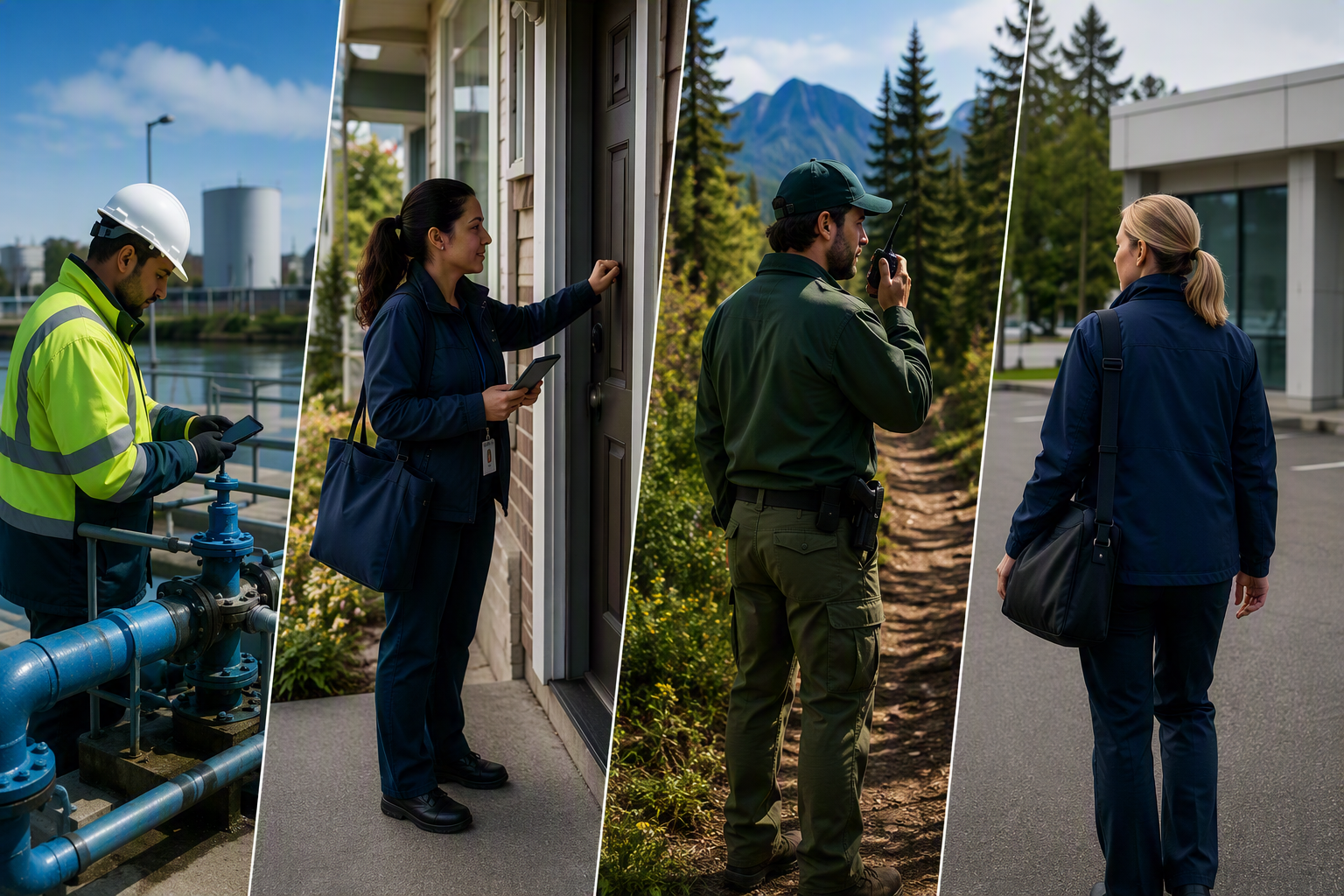
Table of Contents
Public sector lone workers face diverse, location-specific risks
Why traditional safety programs often fall short for those working alone
Connected and visible workers are safer workers
The increase of hybrid and distributed public workforces
Adaptive safety starts with risk segmentation
Safety technology must adapt to the environment
Building an organization of adaptive safety
More prepared and protected
Lone Worker FAQs
Public sector organizations are responsible for protecting workers who often operate alone, out of sight, and in unpredictable environments. Traditional safety programs were not built for this reality.
Across North America, lone work is a significant workforce reality, with approximately 2.7 million lone workers in Canada and 22 million in the United States. Many of these workers operate in roles tied to public service, field operations, healthcare, inspections, outreach, utilities, and community-based services.
For public sector employers, the challenge is not simply creating a safety policy — it’s building a program that can adapt to real-world working conditions. Municipal governments, healthcare authorities, public works teams, utilities, and social-service organizations often support mobile, isolated, or distributed workers across a mix of urban, semi-urban, and remote environments.
This includes workers operating in environments such as:
Rural or remote communities
Public-facing urban environments such as transit hubs, shelters, inspection sites, and enforcement settings
Vehicles and mobile worksites
Home visit and community outreach settings
Utilities, water, environmental, parks, and infrastructure sites
Due to their isolation and unique circumstances, safety risks for these workers can increase significantly depending on factors such as:
Geography: Their location and geography, including isolation levels and how often they work alone.
Public interaction: How much interaction with the public about their job requires and how often they must work in public areas.
Environmental and weather conditions: Potentially dangerous environmental and weather conditions or events.
Communication reliability: The dependability and consistency of communication channels, devices, and networks that keep workers connected to emergency help and contacts.
Different times of day or seasons: The different time of day or season may impact their safety (for example, a difference in light can affect their vison).
A challenge to address diversity: Due to this diverse number of different services accompanying diverse safety risks, it is a challenge for organizations to properly protect these workers through traditional safety programs and protocols.
The result is a simple but important truth: public sector lone worker safety cannot be managed effectively through one-size-fits-all policies.
Public sector lone workers face diverse, location-specific risks
One of the biggest challenges for public sector employers is that lone workers inside the same organization may face completely different hazards depending on where and how they work. A parks worker, transit employee, inspector, outreach worker, public health employee, or administrative staff member may all work for the same organization — but their risks are not the same.
Common risks may include:
Fatigue, stress, and isolation: Working alone and in isolation for long periods of time can take an emotional toll on these people, causing stress, fatigue, and affecting their work.
Violence and harassment: One of the causes of stress for lone workers in the public sector is the risk or potential of violence, harassment, or assault by members of the public who do not have the support of coworkers.
Communication gaps: They can experience communication challenges that are more dangerous for lone workers, such as network dead zones or inaccessible devices.
Environmental exposure: These lone workers are exposed to environmental and weather risks, as well as aggressive wildlife and dangerous plants, without nearby help.
Delayed emergency response when a worker’s location or status is unclear.
Why traditional safety programs often fall short for those working alone
The problem that traditional safety and health programs have with lone workers is that they are usually designed around centralized workplaces or work environments, and generalized policies – rather than the dynamic, unpredictable conditions of lone public sector work. Their primary goal, according to OSHA, is to “prevent workplace injuries, illnesses, and deaths, as well as the suffering and financial hardship these events can cause for workers, their families, and employers.” For employees working in teams, this definition works. However, for people working alone, it’s different. Instead, any current outdated safety strategies could be putting your lone and remote employees more at risk. There could be safety risk to your team by having strategies including:
Generic safety protocols which are not effective in a changing, unpredictable work environment that require specific steps and measures for proper protection.
Outdated hazard assessments and evaluations of the work environments which do not recognize the specific public sector lone worker risks and effectively assess all existing dangers. Make sure thorough hazard assessments for staff working alone are performed.
Static check-in procedures that are unable to adapt to lone worker schedules or to customize according to high-risk environments.
Limited view, updates, and visibility of lone worker conditions that only provide the worker’s location and status, putting them at risk – especially during an emergency.
Fragmented safety culture from disconnected departmental safety approaches that have not updated their safety steps or protocols with lone worker safety considerations.
Connected and visible workers are safer workers
For lone workers, safety depends on more than policy — it depends on visibility, communication, and response. When a worker is isolated, supervisors need a reliable way to confirm status, understand risk, and escalate quickly if something goes wrong.
This is especially important in some provinces in Canada where they require employers to have procedures for checking the well-being of employees working alone or in isolation, to maintain communication throughout the day, and to complete a final check-in when the period of lone work ends.
Keeping lone workers connected can support:
Faster emergency response
Better situational awareness
Improved supervisor engagement
Reduced delays in escalation
Greater confidence for workers in the field
The goal is not to establish surveillance but ensure that workers are not truly alone when help is needed most.
The increase of hybrid and distributed public workforces
Public sector work is becoming more distributed. Employees may now work across field locations, offices, vehicles, home-based environments, community settings, and rotating schedules — sometimes within the same week.
This creates a new challenge: hybrid and distributed work increase the surface area of risk while reducing direct supervision.
Organizations may now need to account for:
Fixed physical locations
Mobile or vehicle-based work
Remote and home-based work
Flexible schedules and shift changes
Digital and communication dependencies
Workers moving between high-risk and lower-risk settings
As work becomes more distributed, safety programs must become more adaptive.
Adaptive safety starts with risk segmentation
In addition to the prioritization of reliable monitoring and communication technology, companies must also develop their public sector safety protocols based on the work environment rather than the job title or task such as environmental, communication, psychological, or human interaction risks. This segmentation will be more specific and personalized according to each specific site.. This kind of framework makes safety more practical, more relevant, and more effective for public sector teams operating in real situations.
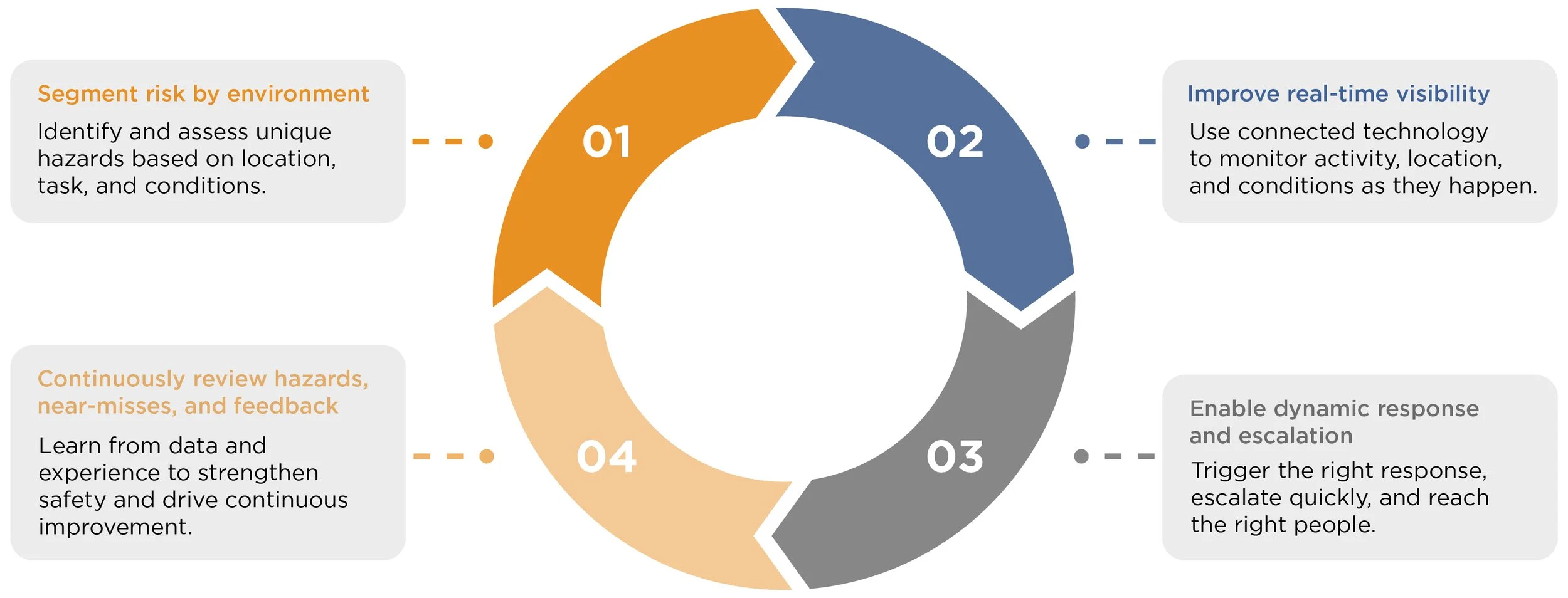
An adaptive safety model
Segment risk by environment
Improve real-time visibility
Enable dynamic response and escalation
Continuously review hazards, near-misses, and feedback
Safety technology must adapt to the environment
Most importantly, incorporate safety technologies and create safety protocols that are adaptive and flexible, allowing your program to provide measures that protect workers without rigidity that impact their work or mental health. To do this, provide a lone worker safety program and safety solution that provides adaptive features such as:
Flexible safety check-ins which can be adjusted for length according to risk level of work environment or prompted by voice command like Siri.
Reliable GPS monitoring and tracking which is activated only while the public sector employee is working and significantly improves the response in an emergency.
Offline capability is important for employees working in areas where they may experience dead communication zones and have to check in with their employer.
Automated emergency escalation which instantly notifies the correct personnel or emergency services when a worker is incapacitated, isolated, or misses a check-in.
Multi-device accessibility enables all employees to easily access critical safety protocols, alerts, and emergency procedures across all devices including smartphones, tablets, and computers.
The primary role of lone worker safety technology is to help make the worker safer. More specifically, safety technology helps lone workers in several ways such as:
Reducing stress and impacting wellness because they do not have to be concerned about their safety when they go to work.
Improving compliance because implementing and using a lone worker technology or check-in system satisfies or improves regulatory compliance, depending on your jurisdiction.
Increasing visibility for safety because these solutions significantly improve connection with public sector employees in remote locations or structures.
Adapting to changing environments in real time because the connection and data that safety technology provides can allow companies to help their lone worker quicky and proactively.
Building an organization of adaptive safety
It is key that public sector companies learn how to adapt to the different environments and risks they encounter with their lone worker team. Whether it’s in the field or in a remote building, there are steps that organizations can take create a safety culture of adaptive safety:
Regularly reassess hazards and risks to catch and monitor any new dangers that may develop before an employee is hurt.
Track near-misses or minor close-calls that may appear innocent but could be preceding signs to an actual serious incident or emergency. Near-misses could signal a future work accident.
Update safety protocols and policies with team members to determine if revisions are required or if they are relevant at all.
Encourage worker feedback on existing safety practices and hazard reporting, including any conditions that make employees feel uncomfortable.
Integrate psychological health and safety measures into all company safety programs as well as physical safety.
Train supervisors and managers on how to effectively and safely coordinate distributed and mobile public sector teams for specific services.
More prepared and protected
Public sector work is diverse. Lone worker risk is dynamic. Safety programs should reflect both.
Organizations with field teams, public-facing workers, remote staff, inspectors, public works employees, healthcare workers, outreach teams, and distributed operations need more than generic procedures. They need adaptive safety programs built around visibility, communication, and environment-specific risk. When safety solutions are flexible enough to reflect how people work, organizations can respond faster, support workers better, and build stronger trust across the workforce.
Learn how SafetyLine helps organizations improve lone worker safety with adaptive check-ins, real-time visibility, and scalable monitoring designed for distributed teams.
Check in. Work Safe. Stay Connected. Book a demo with SafetyLine today to get started!
Lone Worker FAQs
-
A lone worker is an employee who performs their job duties without direct supervision or immediate access to assistance from coworkers. In the public sector, this can include roles such as social workers, water utility inspectors, transit operators, parks employees, home healthcare workers, and even remote administrative staff.
-
Public sector employees often work across a wide range of environments, including rural communities, urban centers, remote infrastructure sites, vehicles, or home offices. Each location presents distinct risks—such as environmental exposure, limited connectivity, public-facing interactions, or isolation—that require flexible, risk-based safety protocols.
-
Organizations can improve communication by implementing lone worker safety solutions that operate reliably in low-connectivity conditions, with features such as offline functionality, GPS location tracking, automated escalation workflows, and configurable check-ins. These tools help maintain visibility and trigger alerts even when network coverage is limited.
-
SafetyLine helps public sector organizations monitor and support lone workers in real time through features such as GPS location visibility, automated emergency escalation, configurable safety check-ins, offline functionality, and multi-device access. These capabilities help organizations respond more quickly to incidents while supporting workers across mobile, remote, and hybrid environments.
-
Regular check-ins help supervisors verify worker safety, quickly identify missed check-ins, and initiate faster response if needed. Configurable check-in schedules also allow organizations to align monitoring frequency with the worker’s risk level, task, and environment.