

Fully Automated Lone Worker Solution
SafetyLine provides reliable, automated protection, 24/7
Worker protection anytime
SafetyLine is fully automated, which means it helps protect workers 24 hours a day, every day. Simple but effective, SafetyLine can be used whenever the person starts their shift and work.
Worker protection anywhere
Leveraging cutting-edge technologies, SafetyLine can locate a worker no matter where they perform their jobs. SafetyLine is compatible with satellite and GPS tracking, allowing the employer to send help to the correct location in an emergency.
Integrates with commonly used devices
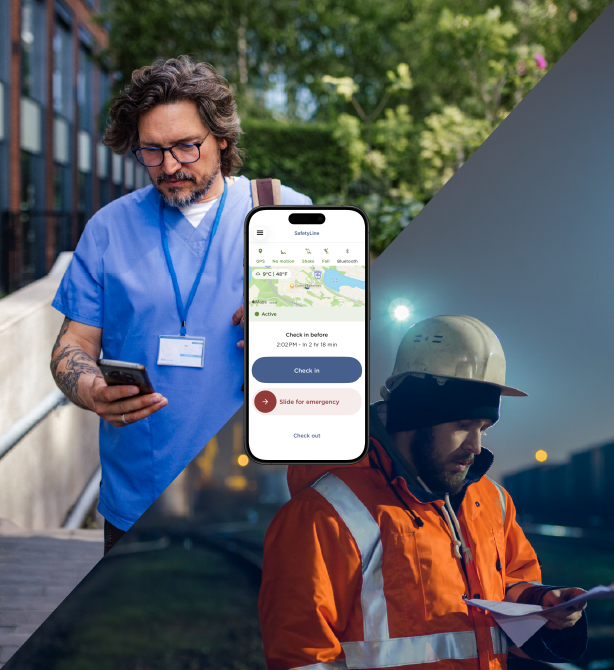
SafetyLine does not require purchasing any additional devices to experience its many benefits. The SafetyLine app can easily be downloaded and used on devices you most likely already use regularly, such as smartphones, tablets, and desktops.
Reduces human error with occupational safety and OHS issues
Regardless of their experience and skill set, people still make mistakes. SafetyLine almost eliminates the risk for human error, significantly increasing the safety and security of the workers and the peace of mind for employers and employees’ families.
Increases compliance with local and federal OHS legislation and regulations
SafetyLine will reduce your costs over time, protecting your people from injuries that require time off and impact operations. Additionally, SafetyLine may help your organization comply with local OHS legislation and regulations, protecting you from potential fines.
A comprehensive suite of worker protection features
SafetyLine’s effectiveness lies in its comprehensive suite of worker protection features such as:
Effective two-way communication
Manual check-ins versus automated check-ins
What’s the biggest difference between manual check-ins versus SafetyLine’s automated check-ins? Reliability. SafetyLine will notify and follow up with missed check-ins so that you don’t have to.
Why not use a manual lone worker solution?
Yes, manual systems, on paper or excel, are more simple. However, they are at severe risk of human mistakes and are unreliable. When your lone workers face hazards while at work, you want to ensure they are as safe as possible as a responsible and caring employer.
Who can benefit from a fully automated lone worker solution?
A fully automated lone worker solution is especially valuable for organizations with employees working alone, remotely, in the field, or away from immediate assistance.
For safety teams managing workers across multiple locations, departments, or job types, relying on manual calls, spreadsheets, or supervisors to keep track of every worker can quickly become difficult to manage. Automated check-ins and missed check-in notifications can help create a more consistent process without requiring managers to manually monitor every worker throughout their shift. SafetyLine currently positions this automation as a way to reduce reliance on manual monitoring and follow up automatically when check-ins are missed.
Organizations that can benefit include:
Municipalities and government: Public works crews, inspectors, parks staff, bylaw officers, engineers, and other employees working throughout the community.
Utilities: Field technicians, operators, maintenance crews, and employees working around electrical infrastructure, confined spaces, or remote locations. SafetyLine specifically identifies remote work, electrical hazards, confined spaces, and work at height among utility-worker risks.
Healthcare and community services: Home healthcare professionals and other employees visiting patients or clients on their own, where immediate assistance may not be available.
Energy and natural resources: Employees working around hazardous equipment, remote sites, electrical hazards, extreme temperatures, or other high-risk environments.
Environmental and field services: Park staff, conservation workers, environmental technicians, and others working in remote or isolated locations.
Non-profits and social services: Employees providing community-based services or interacting with members of the public while working independently.
Lone workers aren't limited to employees who are physically by themselves. Workers may also be considered at risk when they're separated from immediate assistance or working in circumstances where help isn't readily available if something goes wrong.
For organizations with multiple lone workers, locations, or departments, automation helps turn lone worker monitoring into a consistent, scalable safety process rather than something dependent on phone calls, spreadsheets, or individual supervisors.
How can SafetyLine help protect your team?
SafetyLine increases workers’ safety through its multi-faceted approach and comprehensive suite of safety features. This provides you with a valuable, adaptable tool.
Related blog articles on fully automated lone worker solutions


Want to learn more?
Have a short, no pressure discussion to see if SafetyLine is a good fit for your company.
What we'll discuss:
What are you currently doing to keep your lone workers safe?
What's working, what isn't?
If there's a significant issue, could SafetyLine help?
Mutually determine whether a 60-minute demo makes sense
CALL DURATION: 30 MINUTES